
What Does Dementia Care Involve in Walsall? A Guide for Families
If you're looking for dementia care in Walsall, understanding what support involves can help you make informed decisions about the next stage of care. Dementia can affect memory, communication, orientation, behaviour and everyday independence, with needs changing as the condition progresses. This guide explains what dementia care can involve in practice, from daily routines and communication support to nutrition, activities and nursing care.
What Does Dementia Care Involve?
At its core, dementia care means adapting daily life around how the condition affects someone's memory, communication and behaviour, while still supporting them to live as fully as possible. The support someone needs depends on the type and progression of their dementia, as well as their health, abilities, preferences and daily routines.
As dementia progresses, some people may experience increasing difficulties with communication, mobility, eating or swallowing, although the pattern and pace of change vary from person to person. Good support responds to all of these, not just the parts that are easiest to see from the outside.
How Is Dementia Support Different From General Personal Care?
Personal care can involve help with washing, dressing, eating or mobility. Dementia can add another layer of support because memory, communication, orientation and decision-making may also be affected.
Dementia-specific knowledge is important because staff need to understand how changes in memory, communication and behaviour can affect everyday care. Recognising confusion for what it is, rather than mistaking it for stubbornness or a difficult mood, shapes how someone responds in the moment. It also affects how a home is laid out, since disorientation is common and a confusing environment can make things considerably worse.
What Does a Day Actually Look Like in a Care Home?
Structure matters more than people often expect. A predictable rhythm to the day- meals, activities, and rest at broadly similar times, gives someone with dementia something to orient around, even when short-term memory has become unreliable.
Rowanbrook Care Home is organised into smaller living communities, with lounges and dining areas within the home. This provides a more contained setting in which residents can follow familiar routines and receive personalised support.
Meals are part of this rhythm too, not just nutrition. Eating with familiar people, in a familiar space, at a familiar time, can be genuinely reassuring for someone who finds much of the rest of the day confusing.
How Are Communication Difficulties and Distress Handled?
As dementia progresses, finding the right words becomes harder, and distress often shows up through behaviour rather than speech. Someone might become agitated, resistant to help, or withdrawn, not out of choice, but because they can't easily say what's wrong.
Staff trained in dementia learn to read these non-verbal signals: a tense posture, a raised voice, pacing. Professional staff in a care home work in a way to understand each resident's life story alongside their current needs, using that history to interpret behaviour that might otherwise seem confusing or hard to understand.
This matters because distress usually has a cause, even if it isn't obvious. It might be pain, hunger, tiredness or simple disorientation. Responding calmly and patiently, rather than trying to correct or argue, tends to de-escalate a situation far more effectively than confrontation ever could.
Why Do Personal History and Familiar Routines Matter So Much?
Memory changes are common in dementia, although the pattern varies between different types of dementia and between individuals. This is why knowing someone's past, their career, their hobbies, the music they loved, isn't sentimental extra detail. It's a practical tool for connection and calm.
One example from Rowanbrook's own experience illustrates this well. According to Reporting from Walsall Council, a resident who had worked as a mental health nurse and enjoyed gardening was supported through activities built around that history, alongside a quieter, less distracting environment than he'd previously experienced. His experience illustrates how using a person's interests and life history can help staff create more meaningful daily engagement.
This kind of personalisation isn't a luxury add-on. It's central to why some environments work far better for someone with dementia than others, even when the basic level of physical care is similar.



How Are Nutrition and Daily Activity Supported?
Eating well becomes harder as dementia progresses, either because of memory lapses around mealtimes or because of physical changes affecting appetite or swallowing. Rowanbrook's on-site chefs prepare meals around residents' preferences and dietary needs. This is particularly relevant when someone needs support to maintain a suitable and enjoyable diet.
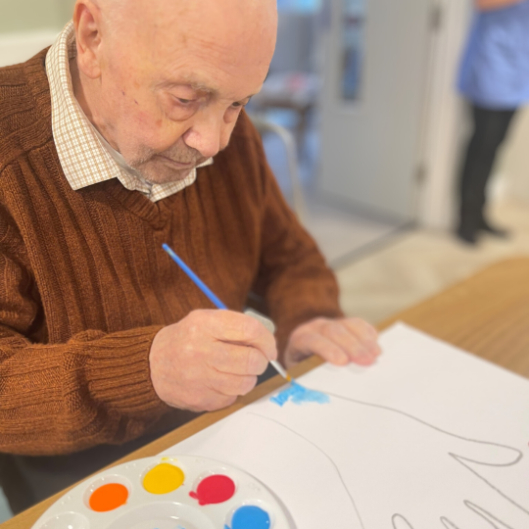
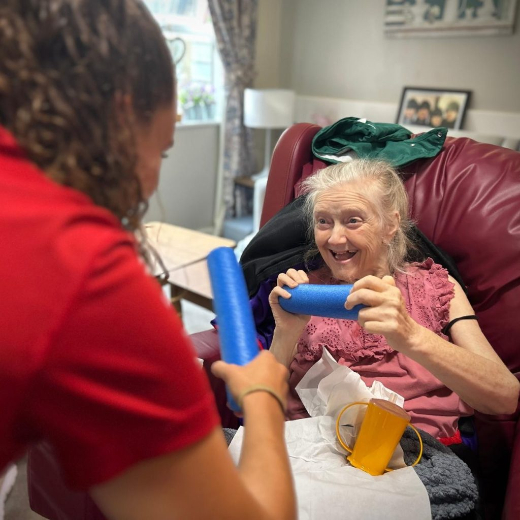
Meaningful activities can give structure to the day and provide opportunities for social interaction, enjoyment and continued participation in familiar interests. This might mean structured group activities, or something as individual as time in a private garden, which Rowanbrook also provides as a calmer alternative for residents who find groups overwhelming.
None of this reverses the underlying condition. Good nutrition and engagement support well-being and quality of life, but they don't slow or treat dementia itself, and families must understand that distinction.
When Does Dementia Care Need Additional Nursing Involvement?
At some point, dementia can be accompanied by physical health needs that require a registered nurse rather than general care staff alone. This might include managing several medications safely, supporting mobility after a fall, or responding to a health condition that changes quickly.
Rowanbrook provides complex nursing care alongside dementia support, delivered by a team that includes registered nurses and mental health specialists working together. This matters because dementia rarely arrives in isolation. Many residents are also managing separate physical conditions, and having both kinds of expertise under one roof avoids gaps between different services.
Changes such as repeated falls, swallowing difficulties, increasing physical health needs or significant changes in behaviour should prompt a review of the person's care and clinical support needs.

How Can Families Choose the Right Setting?
Start with specific questions. Ask how staff are trained to recognise and respond to distress, how a resident's personal history is gathered and actually used day-to-day, and whether nursing support is available if physical health needs arise later.
It's also worth asking how the environment itself is designed. Smaller, quieter living spaces tend to suit people who find large, noisy settings disorienting, while a secure, enclosed garden can also provide an opportunity to spend time outdoors, away from busier communal areas. Visiting in person and watching how staff interact with current residents tells you more than any brochure can.
Finally, remember that a diagnosis affects the whole family, not just the person living with it. A good home should be willing to support you too, not only the resident, as you adjust to what dementia means for your relationship and daily life together.
Frequently Asked Questions
What's the difference between dementia care and general residential care?
Dementia care places particular emphasis on understanding cognitive changes, communication, orientation, distress and the person's individual routines. The level of specialist support varies between care settings.
Can dementia care slow down or reverse the condition?
There is currently no cure for the major progressive dementias, although treatment and support can help manage symptoms and maintain quality of life. Good care supports comfort, communication and quality of life, but it doesn't treat or reverse the underlying disease process.
Why does staff knowing someone's life history matter?
Long-term memories often remain clearer than recent ones as dementia progresses. Understanding a person's history helps staff connect with them meaningfully and interpret behaviour that might otherwise seem confusing.
When would someone with dementia need nursing care rather than general dementia support?
Signs include frequent falls, swallowing difficulties, complex medication needs, or behavioural symptoms that have become difficult to manage safely without a registered nurse involved.
How can families support someone with dementia during a home visit?
Bringing familiar items, sticking to a similar visiting time, and following the person's lead in conversation, rather than correcting confusion, tend to make visits calmer for everyone involved.
If you'd like to talk through what dementia care might look like for someone you love, the team at Rowanbrook Care Home in Walsall is happy to answer questions or arrange a visit.